Economists have been claiming for years that the money of the super-rich ultimately ends up with the common man. They call this “trickle-down” economics. But in practice, this turns out not to be true. The figure below, “The Myth of the Trickle-Down Economics,” illustrates this well.
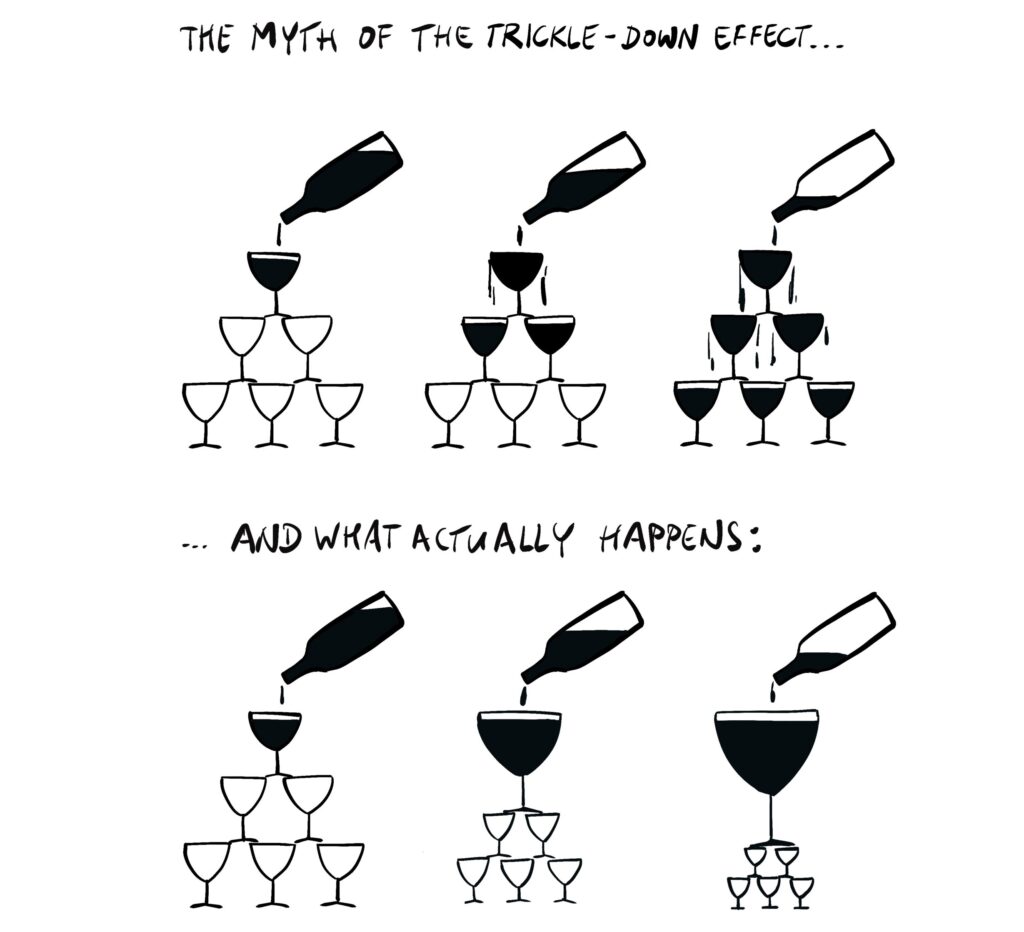
The Myth of the Trickle-Down Economics
Wine is poured into the top glass—the glass of the super-rich—and that wine then “automatically” trickles down to ordinary citizens. This theory, this story, became popular in the 1980s, especially in the United States under President Ronald Reagan. The story goes like this: when rich people and large corporations pay less taxes and receive government subsidies, they have more money left over. They use that money to start new businesses or expand existing ones. These businesses need employees. This creates more jobs, which benefits society as a whole.
But it turns out that prosperity doesn’t automatically trickle down. In reality, a large portion of economic growth and additional wealth stays with the richest people, and ordinary people hardly benefit from it. The gap between rich and poor only widens.
Below is a picture of the current unhealthy situation in the world where all our money is flowing to a very small group of the super-rich.
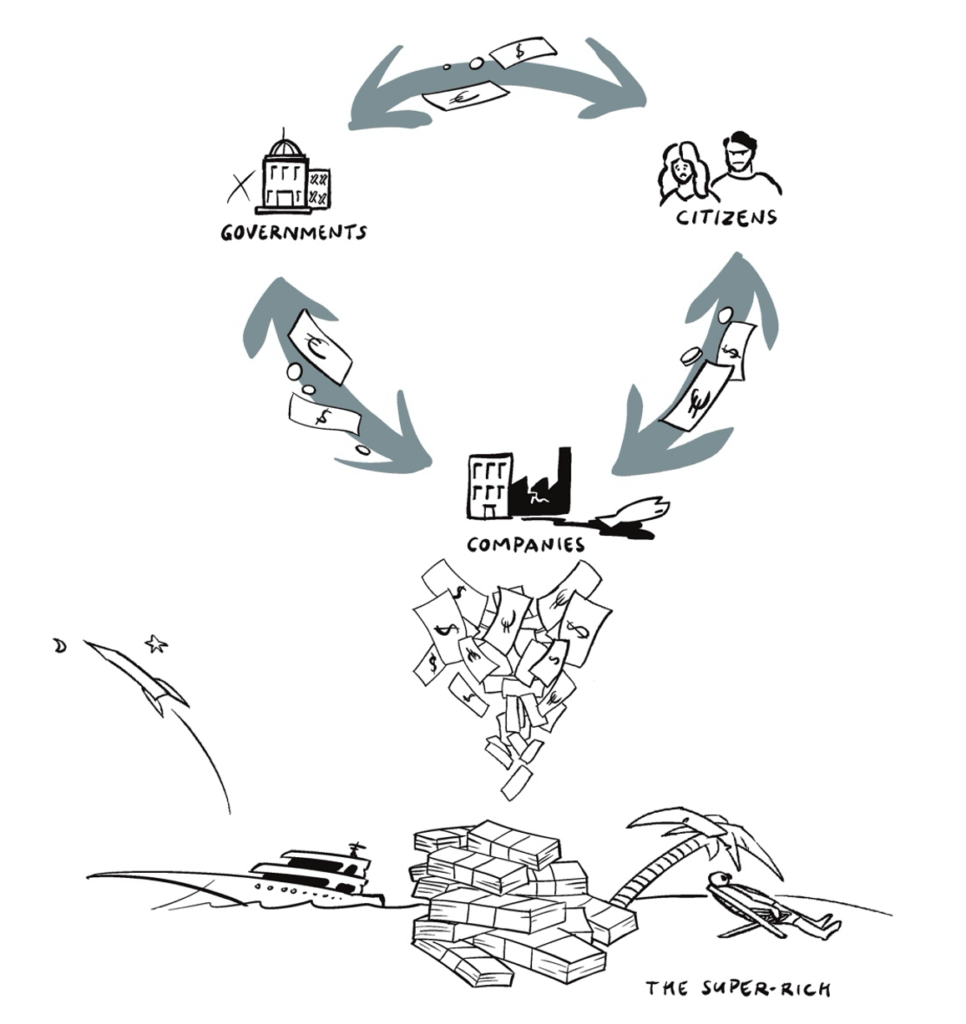
The Current Unhealthy Situation in the World
Despite the fact that most economists now confirm that the triple-down economy is flawed, we continue to rely on an economic framework that cannot meet the demands of the modern world. It’s high time for a healthier economic model. A model where money no longer drains to a very small group of the super-rich, but where it circulates within the healthy circle of citizens, businesses, and governments, as shown below.
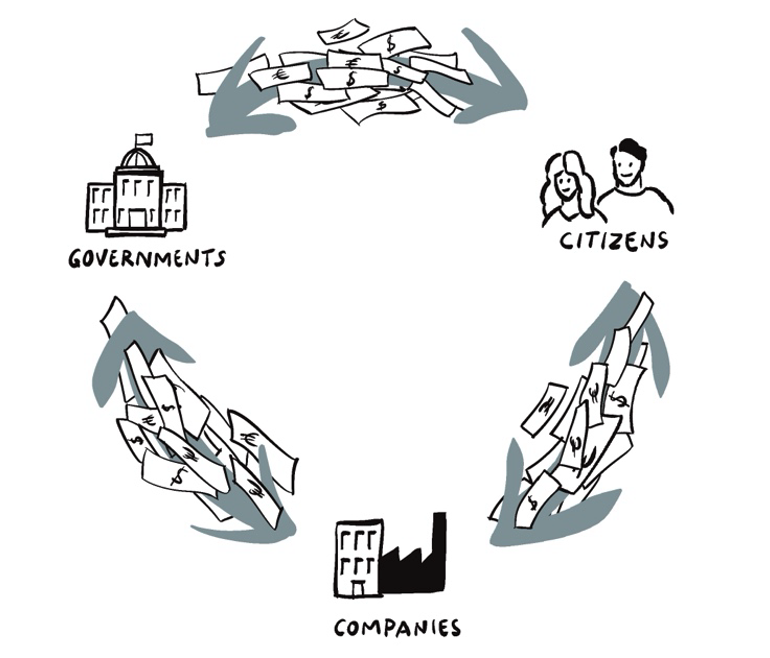
The Healthy Situation with the “Superrichtax”
Visit the book page for more information on the “Superrichtax”.